Build useful things. Keep communities in control. Turn an agreed share of productive earnings into lasting public wealth.
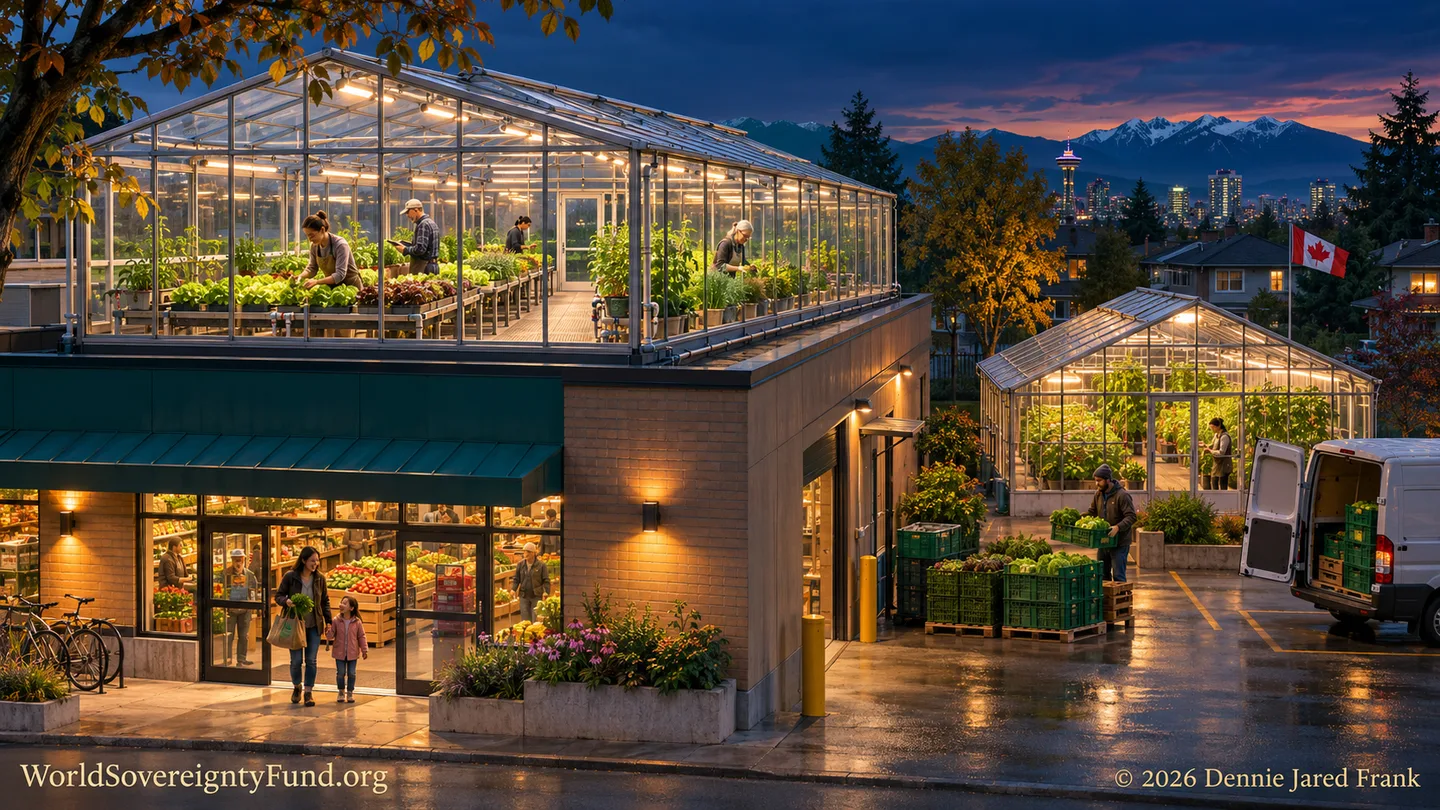
A greenhouse supplying the shop below. A packing line shared by local growers. A delivery service connecting them. Start with a real need, prove one project, and grow from measured results.
In this proposed implementation, a community co-operative owns and operates the first enterprise. It could become the local operating foundation for an Omni-Superintelligence Centre as projects develop. The centre begins with people, useful equipment and available software, then adds capabilities as they prove their value.
Ownership and control
Residents, workers and participating organizations elect representatives under the adopted membership rules. The board approves borrowing, major purchases and surplus policies. A paid operator runs the service. Named people have authority to pause unsafe operations and approve a restart.
Customers and workers
Local customers commit to a minimum amount of paid use before equipment is purchased. Workers help redesign the workflow and identify training or reassignment needs. Their pay, training and cover during absence belong in the operating budget.
Money and public benefit
Customer payments cover wages, supplies, energy, maintenance, insurance, taxes, financing obligations and replacement reserves. An agreed portion of verified net earnings can then be remitted to the Fund. Publish the accounts and the benefits residents actually receive.
A local co-operative is a proposed vehicle for implementing community ownership. The wider framework connects productive enterprises, human-governed Omni-Superintelligence Centres, the Robot Banking System, the World Sovereignty Fund and individual Birthright entitlements.
A grocery store or shopping centre provides a suitable site and a route to customers. A community enterprise grows produce and sells it under a supply agreement. A rooftop greenhouse and a greenhouse on nearby land are two possible locations for the same operating model.
Illustrative concept. A site assessment would determine the actual structure, size, access and operating design.
Option A · Above a grocery store or shopping centre
Agree terms with the building owner and the grocery buyer. Commission a structural and building-services assessment before selecting equipment. The design team checks greenhouse and wet growing-system loads, snow and wind, waterproofing, drainage, safe access, utilities and the route for harvested produce.
Price structural work and access alongside the greenhouse. The first bay’s size follows the roof design and paid demand.
Option B · A community greenhouse beside the store
Lease suitable land near the buyer or use a bay in an existing greenhouse. Confirm land use, utilities, access, drainage and a secure tenure long enough to justify the equipment. Plan packing and cooling with the buyer.
Compare the whole installed and operating cost of both sites before choosing. An existing greenhouse bay offers another way to run a trial.
Roof and waterproofing assessment guidance — City of Calgary green-roof guide. A greenhouse needs its own site-specific professional design and current local approvals.
🌱
Agree the crop and the buyer
Ask the produce manager which lettuce or herb it buys regularly, in what volume, at what price, and to what quality standard. Put purchase commitments and delivery terms in writing.
⚙
Build a small growing operation
Around 400 sq. ft. is an illustrative trial size to investigate. A grower and designer determine the actual crop area, aisles, propagation space, irrigation, ventilation and packing needs. Obtain a complete installed quote.
◉
Automate the repeatable tasks
Begin with irrigation timers, automatic ventilation and temperature alerts. A grower supervises crops and adjusts the controls. Record faults and maintain a manual response plan for interruptions.
▧
Harvest, pack and sell
Plant in batches matched to the supply agreement. Staff harvest, inspect and pack accepted produce, record the batch, and move it through the agreed cooling and delivery process. The store pays the enterprise for accepted deliveries.
◎
Measure the season and decide
Publish sellable output, rejected produce, labour, water, energy, downtime, full cost per unit and customer renewals. Use verified accounts to determine whether a surplus exists and whether expansion is justified.
Greenhouse pilot responsibilities
Partner
What to agree before planting
Building or land owner
Lease length, access, rent, utilities, roof or land responsibilities, insurance, repairs and removal of equipment when the lease ends.
Grocery buyer
Crop, weekly volume, price, quality, packaging, payment terms, delivery and treatment of missed or rejected orders.
Community enterprise
Equipment ownership, paid operator, training, production records, working capital, replacement reserves and the agreed Fund contribution.
Grower and technical team
Growing method, crop schedule, commissioning, maintenance, fault response and the records needed to judge performance.
For a Canadian pilot, review food handling, labelling, traceability and any licensing requirements with the appropriate authorities for the activities and markets involved. Price heating and lighting locally before proposing winter production. Potential heat recovery from the building needs its own technical and commercial assessment.
A real rooftop example exists. Walmart Canada reported in May 2025 that produce from Lufa Farms’ greenhouse above its Marché Central store in Montréal was being sold downstairs. This demonstrates the physical supply model. Community ownership and contributions to the World Sovereignty Fund are the proposed additions here.
Open a guide to see the first equipment, paying customers, responsibilities, costs and trial. These are proposed starting designs to develop with local operators and buyers.
🌱A community greenhouseGrow near the people who eat it. Start with one crop and committed local buyers.+
What to build
Lease an existing greenhouse bay or build one modest growing space on suitable community land. Start with lettuce or an herb selected with the buyer. Provide growing benches, irrigation, ventilation, clean packing space and access to cooling.
Who pays
A grocer, community kitchen or produce-box group agrees on weekly quantities, quality, delivery days and a purchase price. Record what happens if a harvest is late or a buyer cancels.
What to automate first
Automate irrigation timing, ventilation and temperature alerts first. A grower checks crops, water, nutrients, plant health and equipment. Add further controls after the first system proves useful.
People and responsibilities
A paid grower leads production. Trained staff handle harvest, packing, cleaning and deliveries. A technician supports controls and repairs. Worker training and paid cover during absence belong in the budget.
What to price locally
Obtain quotes for the site, structure, utilities, installation, benches, controls, cooling and working capital. Budget wages, seed, growing media, nutrients, water, energy, packaging, insurance, repairs and replacement reserves.
How to test it
Use one crop, one growing bay and one selling season. Record accepted produce, unsold produce, labour hours, water, energy and the full cost per sellable unit. Test whether buyers reorder at a sustainable price.
When to expand
Add a second bay when repeat paid demand covers full costs and the operator can maintain crop quality. Evaluate winter production separately using local heating and lighting costs.
How the community benefits
Fresh local supply and paid work can begin during the pilot. Budget any discounted produce explicitly. Once verified net earnings exist, remit the agreed portion through the proposed financial pathway to the Fund.
📦Shared packing and labellingLet several producers use equipment that each would struggle to justify alone.+
What to build
Rent a suitable workroom and install one weighing, sealing or labelling station chosen for a specific product. Plan cleanable work surfaces, goods receiving, storage and a clear route from unpacked goods to finished orders.
Who pays
Ask several local producers for paid bookings or minimum monthly volumes. Agree a fee per batch, hour or accepted unit, including materials, setup and cleaning.
What to automate first
Start with a calibrated scale, label printer and assisted sealing. Introduce a conveyor or product-specific machine when measured demand supports it. Operators check weights, labels and finished batches.
People and responsibilities
A trained operator schedules customers, changes products, cleans equipment and checks quality. Keep product and batch records. Food, cosmetics and other products each need suitable handling and applicable approvals.
What to price locally
Include rent, fit-out, equipment lease, supplies, wages, cleaning, calibration, insurance, maintenance and downtime. Count setup and changeover time when calculating usable capacity.
How to test it
Run booked batches for several customers on leased or contracted equipment. Compare cost per accepted unit, turnaround, error rates and hours used against the previous process.
When to expand
Add machinery when recurring bookings cover its full cost. Check the budget after removing the largest customer and after allowing for a repair shutdown.
How the community benefits
Local producers gain access to shared capacity. Affordable service prices and an agreed Fund contribution are both designed into the business plan.
🚚Shipping and local distributionCombine deliveries, storage and collection so local producers can share a route.+
What to build
Use a small collection point, reusable crates, shelving and a leased delivery vehicle. Add temperature-controlled storage and transport when the goods require it.
Who pays
Grocers, producers and businesses commit to collection days, delivery volumes and service fees. Establish responsibility for lost goods, rejected deliveries, late orders and temperature excursions.
What to automate first
Use order consolidation, route-planning software, barcode scans, stock alerts and delivery confirmations. Drivers and dispatch staff operate the first service. Evaluate warehouse machinery only after volumes justify it.
People and responsibilities
A dispatcher manages bookings and exceptions. Qualified drivers handle vehicles and handover. Staff verify condition, inventory and any required temperature records.
What to price locally
Quote space, vehicle lease, insurance, scanners, software and storage. Budget wages, fuel or charging, tyres, repairs, cooling, claims and empty return trips.
How to test it
Run one scheduled route for a defined group of customers. Record paid drops, total kilometres, handling time, on-time delivery, damage, spoilage and cost per delivery.
When to expand
Add a route when booked business covers driver time, vehicle and depot costs. Include a lower-volume scenario and loss of the largest customer.
How the community benefits
Producers can reach more buyers and residents can access local goods. Verified earnings support the agreed contribution to the Fund.
🚜Shared agricultural automationStart with one repeatable farm task across a group of willing growers.+
What to build
Form an equipment-sharing service around a defined task such as irrigation monitoring or scheduling. Use compatible sensors, controls and a maintenance agreement on participating farms.
Who pays
Farmers agree the hectares or zones covered, service periods and subscription or service fees. Establish equipment access, data ownership and responsibility for crop decisions.
What to automate first
Start with soil-moisture monitoring, irrigation alerts and controlled scheduling supervised by the grower. An agronomist helps determine crop-specific decisions. Test additional machinery separately.
People and responsibilities
Farmers retain crop decisions. A trained technician installs and maintains equipment, and a qualified agronomy adviser supports interpretation. Name who responds to faults or interrupted connectivity.
What to price locally
Include sensors, communications, installation, compatible irrigation hardware, subscriptions, calibration, support visits, repairs, insurance and off-season storage where relevant.
How to test it
Monitor a limited area for one relevant season. Compare with an appropriate baseline while recording weather differences, crop outcomes, water use, labour and system reliability.
When to expand
Extend to more farms when customers renew and the service demonstrates useful performance at a price that covers support. Evaluate harvesting or field robots as a later, separate project.
How the community benefits
Farmers gain a shared technical service and access to equipment. The co-operative can contribute agreed verified earnings while supporting local food production.
🏭Shared manufacturing and repairMake a part customers already order, or provide a repeatable repair service.+
What to build
Lease a workshop and choose one process, such as CNC cutting for repeat local orders. Obtain machine guarding, extraction, electrical capacity, suitable materials storage and measuring equipment through a qualified shop designer.
Who pays
Secure repeat orders from local trades or businesses with drawings, material specifications, tolerances, quantities and acceptance terms. Quote setup and design work separately where needed.
What to automate first
Use digital job scheduling and a machine suited to the contracted process. Add tool monitoring or inspection support after establishing reliable production. Operators approve programs and finished parts.
People and responsibilities
A qualified machinist or technician handles setup, maintenance and quality. Staff manage quoting, materials and customer handover. Training, guarding and approved operating procedures are part of the project.
What to price locally
Quote the lease, machine, installation, tooling, extraction and inspection equipment. Budget wages, materials, power, software, scrap, consumables, repair support and replacement.
How to test it
Produce one paid repeat part or service on leased equipment or through a partner shop. Measure accepted output, scrap, setup hours, machine hours and delivery performance.
When to expand
Purchase additional capacity when accepted repeat orders cover the full cost. Confirm what happens during machine failure and when a key customer leaves.
How the community benefits
Local firms gain access to production and repair capacity. Community ownership retains an agreed share of verified earnings for the wider Fund.
🏗️Housing components and constructionBegin with a component builders need regularly, then develop a reliable production service.+
What to build
Use a workshop to produce one defined component, such as cut timber kits or wall panels, for an experienced builder. Have the component and production method reviewed by the relevant design and building professionals.
Who pays
Builders place orders against accepted drawings, material specifications, delivery dates and inspection terms. Connect production capacity to a real building pipeline.
What to automate first
Start with digital cut lists, stock tracking and repeat cutting or jig-assisted assembly. Trained workers inspect materials, connections, dimensions and finished components.
People and responsibilities
A production lead works with qualified trades, designers and the purchasing builder. Staff handle assembly, quality records, safe storage and transport.
What to price locally
Include space, machines, jigs, professional design, approvals, materials, labour, transport, insurance, warranty obligations, maintenance and working capital for orders.
How to test it
Supply one agreed component for a limited order. Track defects, accepted units, production time, transport damage, installed cost and the builder’s repeat demand.
When to expand
Increase output when the buyer accepts the product, the building process supports it and full costs are covered. Assess each new component before adding it.
How the community benefits
The community gains productive capacity and skilled paid work. Earnings can contribute to the Fund, while housing projects still require land, finance, infrastructure and approvals.
💧Municipal services and utilitiesImprove an existing service through a small, measurable trial with public oversight.+
What to build
Start with a municipality’s defined need, such as water-leak monitoring or equipment-condition tracking. Use a limited zone or asset group and record existing service performance.
Who pays
A municipality purchases a defined monitoring service through its applicable procurement process. Agree ownership of equipment and data, service levels and responsibility for repairs.
What to automate first
Use readings, alerts and scheduling to help authorized crews prioritize inspections. Public operators make service and repair decisions and approve access to operational systems.
People and responsibilities
Municipal staff and qualified technicians validate alerts, inspect assets and take action. Budget training, cybersecurity support and maintenance of the monitoring equipment.
What to price locally
Include surveys, sensors, installation, communications, software, calibration, staff response, repair support and replacement. Compare savings with the total cost of the pilot.
How to test it
Monitor a defined area over a relevant operating period. Record verified leaks or faults, false alarms, response time, service disruption, avoided costs and operating expense.
When to expand
Extend when independently checked results demonstrate a useful service and the municipality approves the budget. Recheck assumptions as infrastructure and operating conditions change.
How the community benefits
A co-operative can earn a service fee and contribute agreed net earnings. Municipal cost savings enter the municipality’s budget and can support locally approved priorities; any Fund contribution needs an authorized agreement.
♻️Recycling and material recoveryChoose one material with a reliable supply and an identified buyer.+
What to build
Start with a suitable collection and sorting area for a specific stream, such as clean commercial cardboard. Agree handling, storage, fire protection and equipment needs with qualified local operators.
Who pays
Businesses pay an agreed collection or processing fee where viable. A recycler confirms material grades, contamination limits, prices, minimum loads and rejection terms.
What to automate first
Begin with booking, weighing, inventory records and contamination checks. Add appropriate compacting or sorting equipment when volumes support the investment.
People and responsibilities
Trained workers inspect incoming loads, operate equipment, remove unsuitable material and arrange collection. Establish clear responsibility for contaminated or rejected loads.
What to price locally
Include space, containers, scales, equipment lease, labour, collection, insurance, maintenance and disposal charges. Budget for changes in material prices.
How to test it
Process contracted loads for one material. Track accepted tonnes, contamination, buyer payments, collection costs, rejected material and full cost per tonne.
When to expand
Add capacity when service fees and conservative buyer prices cover all costs. Check the business case if material prices fall or the buyer rejects a load.
How the community benefits
Local material recovery can provide paid work and a service to businesses. Verified commercial earnings can support the Fund; environmental outcomes are measured alongside the finances.
Connect projects as demand grows. A greenhouse could become a paying customer of the shared packing service. The packing service could book the delivery route. Record each transaction clearly, including transfers between related enterprises, so the same sale or profit is counted once.
Further areas to develop
Energy and building maintenance
Investigate one contracted monitoring or maintenance task with an energy operator or property owner. Start with service records, metering or inspection scheduling and qualified people responding to findings.
Computing and business administration
Test a paid scheduling, inventory or document-processing service for local businesses. Keep client data under agreed controls and require a person to review consequential outputs.
Education and training
Develop supervised equipment training with a local school or training provider. Define the learner’s goal, accessible instruction, instructor responsibility and how the service is funded.
Care and accessibility
Work with an established care provider on a narrow support task, such as supply logistics or maintenance scheduling. Service users and qualified staff determine consent, access and care responsibilities.
A first pilot that can be implemented
Earn confidence through measured results.
Stage
Work to complete
Evidence for the next decision
Find a shared bottleneck
Ask local producers which tasks cost the most time or money. Record current prices, volumes, delays and quality problems.
A defined service with recurring demand and an existing baseline.
Get commitments before spending
Ask several customers to commit to minimum paid volumes. Price staff, installation, utilities, downtime and working capital. Test loss of the largest customer.
Written commitments, quotes and a full cost model that can be reviewed.
Establish ownership and agreements
Adopt the local structure, board responsibilities, operator contract, site agreement, funding terms and net-earnings contribution policy.
Documented ownership, lawful operating arrangements and named accountable people.
Run a limited trial
Lease equipment or contract for equipment time where available. Track paid output, accepted quality, costs, downtime and changes in workers’ duties.
Completed orders and real operating records over a relevant trial period.
Make the expansion decision public
Publish the results. Decide whether to expand, revise or stop. Check reserves, customer renewals, operator capacity and actual community benefit.
Repeat demand covering full costs and a measurable reason to continue.
A municipal pilot follows the same evidence-based approach through the municipality’s service planning, procurement and budget processes. The local institution chooses the operating structure that fits its ownership and responsibilities.
Prepare a project brief before seeking equipment
Name the community, the service, the intended users and the problem it will solve.
Record buyer commitments, price, expected volume and the terms of acceptance.
List the site, equipment, installation, utilities, paid roles, maintenance and local approvals.
Show startup funding, working capital, operating costs, reserves and a downside scenario.
Document community control, data access, shutdown authority and the Fund contribution agreement.
Set the trial period, reporting method and evidence needed to expand, revise or stop.
A paying service comes first. A sustainable contribution follows.
Separate the cost of establishing the enterprise from the monthly cost of operating it. Use local quotes and committed sales to test the project. The following calculator illustrates one planning step.
Startup funding
Site and professional design, equipment, delivery, installation, commissioning, permits, training and working capital. Document who provides each amount, whether it is a grant, member capital or borrowing, and what obligations follow.
Ongoing obligations
Paid staff, supplies, energy, maintenance, insurance, administration, taxes, financing payments and replacement reserves. Include the cost of growing cycles or customer payment delays before cash arrives.
Try a monthly cash plan
Enter your own figures in CAD. The optional example uses invented numbers to demonstrate arithmetic. It is independent of the greenhouse design and gives no estimate of its costs or output.
Include wages, supplies, energy, maintenance, taxes, financing payments and reserve funding. Count each payment once.
The actual agreement determines the share of verified net earnings. This cash model tests what may be affordable.
Cash remaining after entered obligations$0
Illustrative amount available for a Fund contribution$0
Cash retained after that illustrative contribution$0
Enter receipts, costs and an agreed percentage to explore a scenario.
Cash availability and accounting profit are different measures. An accountant reconciles the records to verified net earnings, obligations and available cash before any actual remittance. A contribution also depends on the adopted agreement and authorized receiving arrangements.
Test the plan with fewer sales, higher energy costs and an equipment breakdown. If receipts cannot cover obligations, revise the project or its financing before promising contributions.
How the local project connects to the proposal
From useful production to a shared Birthright.
◎
Community-owned productive enterprises
The local enterprise owns or operates the equipment and sells useful goods or services. Its human-governed Omni-Superintelligence Centre coordinates equipment, resources, records and technical support as capacity develops.
⚙
Verified net earnings after obligations
Pay employees and suppliers, maintain equipment, meet taxes and financing obligations, and fund appropriate reserves. Verify the accounts. The contribution is determined by the ownership and participation agreement.
▤
The Robot Banking System
The proposed financial bridge accounts for, safeguards and transfers agreed automation earnings through appropriately authorized institutions. Early pilots can use regulated banking and payment partners while the wider structure is developed.
◉
The World Sovereignty Fund
The Fund receives contributions, accumulates and invests collective capital, protects its long-term foundation and determines a sustainable amount available for distribution.
❋
People, communities and ecological protection
The Birthright Coin represents a participating person’s lifetime, non-transferable entitlement. Approved personal payments reach an existing bank account or another authorized payment account in ordinary spendable currency. A guaranteed income floor requires separately established financing and reserves.
The longer-term allocation, including the future global share
Following the short proposal, the eventual allocation would be 69% personal Birthright income, 20% community development, 10% environmental protection and restoration, and 1% global. The global allocation would receive its 1% one day as the system develops. Its introduction and timing would be established through the Fund’s adopted governance and sustainable distribution policy.
69%Personal Birthright incomeApproved payments to participating people.
20%Community developmentLocally evaluated infrastructure and economic projects.
10%Environmental protectionEcological stewardship and restoration.
1%Global allocationA future stage as the system develops.
These percentages apply to the Fund’s approved distributable earnings after its spending and capital-preservation rules. Each enterprise’s contribution is set separately. This guide follows the short proposal’s eventual allocation and treats the 1% global share as a later stage. The complete proposal currently displays 70/20/10. This guide uses the selected short-proposal allocation, with the global share introduced at a future stage.
“Automation pays for humanity.”
One local project can demonstrate the ownership, production and accounting cycle. Wider Birthright payments depend on the institutions, capital, earnings, participants and safeguards that develop over time.
Proposal and practical references
Build on clear foundations.
This guide develops implementation examples around the proposal. Equipment choices, project size and trial designs are working suggestions to refine with local partners. Construction design, permissions, quotes and financial feasibility are specific to each location.
Complete proposal · community control, human oversight, financial safeguards and staged implementation. Its allocation table currently differs from the short proposal.
Select any sector to open its own detailed page, including an example project, equipment, operating costs, safety requirements and community ownership.