A stronger start
Young adults could have more room to train, study, build a business, or find suitable work without every setback becoming a financial emergency.
 WORLD SOVEREIGNTY FUND& THE BIRTHRIGHT SYSTEM
01 / FUTURE INCOME
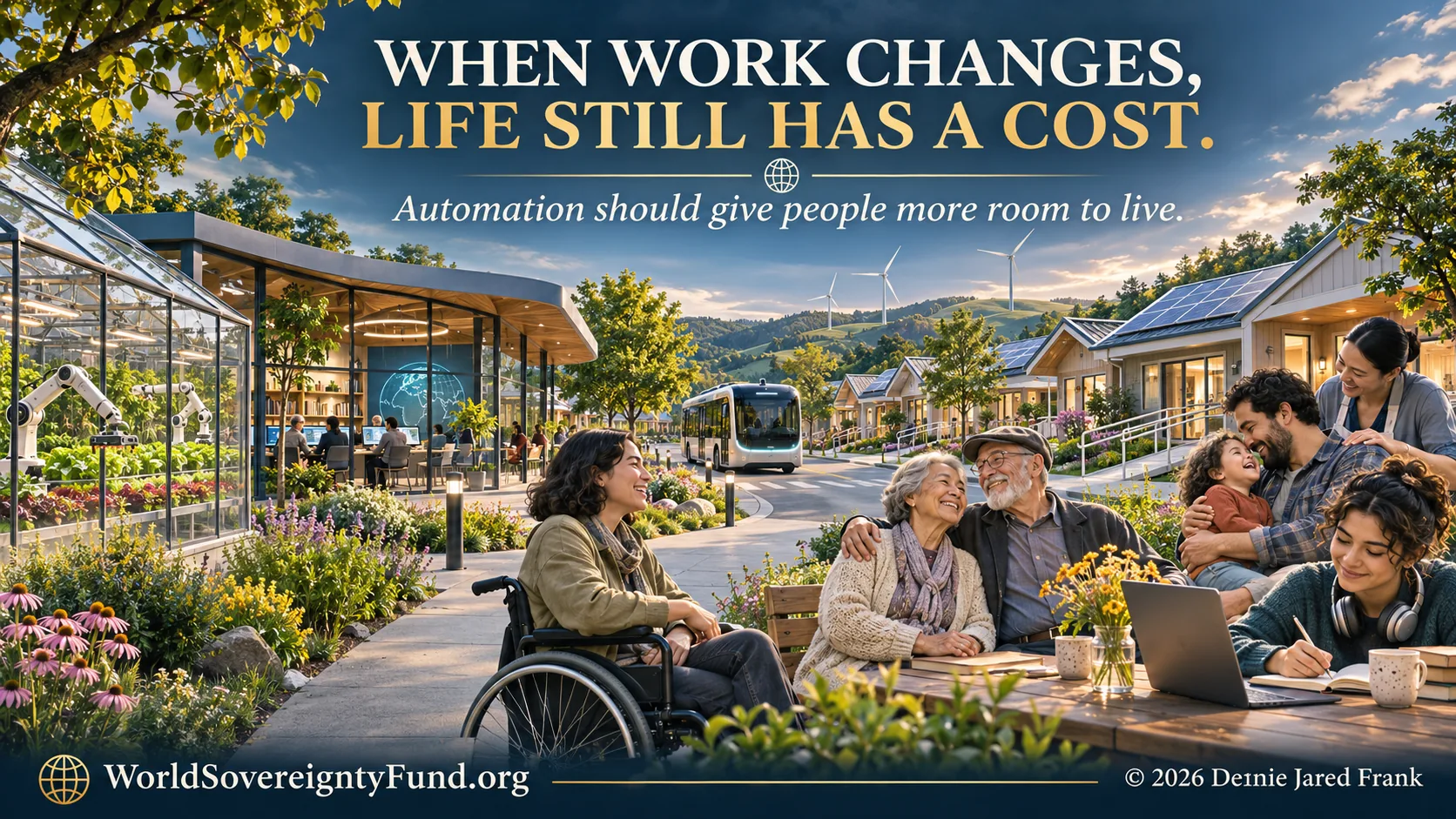
Machines can take over tasks. People still need a home, food, care, and a future. The question is who receives the wealth technology makes possible? Together we all can make a difference, by signing petitions. This is the proper way to make a difference.
THE HARD QUESTION
For a person whose income depends on selling their time, a change in demand for that time can change everything: where they live, whether they can pay a debt, and how much control they have over tomorrow. Learning new skills can help. It does not pay every household’s bills during a difficult transition.
Automation could bring better tools, new businesses, safer work, and lower production costs. It could also reduce demand for some tasks and shift bargaining power. There is no automatic rule that turns a business’s productivity gains into financial security for every person.
That gap is a design problem society can choose to address. A shared source of income would give people another foundation alongside employment, enterprise, pensions, and existing public support.
EVIDENCE, WITHOUT THE HYPE
The ILO’s 2025 study estimates that one in four workers worldwide is in an occupation with some exposure to generative AI. It concludes that changes within jobs are more likely than wholesale replacement. Exposure is a measure of potential task impact; it is not a count of people who will lose their jobs.
The IMF’s 2024 analysis also describes opportunities to raise productivity and risks of widening inequality, including through greater returns to capital. These studies examine different scopes of AI and should not be treated as interchangeable forecasts.
We do not need a prediction of total unemployment to take economic security seriously. It is sensible to build options before a household’s only source of income comes under pressure.
Sources: ILO, Generative AI and Jobs (May 2025); IMF, AI and the global economy (January 2024). These sources inform the discussion of work; they do not endorse this proposal.
WHAT SECURITY COULD MAKE POSSIBLE
The long-term aim is ordinary, spendable income. If funded sustainably and large enough to matter, it could support choices that are too often dictated by financial pressure.
Young adults could have more room to train, study, build a business, or find suitable work without every setback becoming a financial emergency.
Parents and family caregivers could have more flexibility to support children, an aging parent, or a loved one who needs help. Care has value even when it has no wage attached.
People facing reduced hours, a job change, illness, or disability could have an additional financial buffer. Its real value would depend on payment size, living costs, and interactions with existing benefits.
Older people could receive an additional income source alongside their existing arrangements. The goal is more independence, more options, and less pressure on families already stretching their resources.
“They don’t recognize the cage because they were born inside of it.”
A metaphor for the economic rules we inherit.
When survival has always depended on securing enough paid work, it can become difficult to imagine a different foundation. But the rules governing ownership, income, and public institutions are human decisions. They can be examined and changed.
A person’s worth is larger than their market wage. Raising children, caring for someone, learning, creating, and participating in a community all matter. The purpose of economic progress should include making more of that life possible.
The World Sovereignty Fund proposes building an institution that could turn shared productive wealth into lasting public benefit. The next question is practical: how would the money be earned, protected, and distributed?
SECURITY WITHOUT DEPENDENCE
Financial security should give people more control over their lives. If those administering a shared fund can threaten someone’s income, demand loyalty, or hide decisions, that security becomes another source of pressure. The rules must protect people’s independence as well as their money.
Good intentions alone are not a safeguard. Decision-makers can favour familiar people, defend mistakes, or put their position ahead of the public. Clear eligibility rules, published decisions, independent review, and a meaningful appeal route help limit the room for favouritism and retaliation.
Ask a practical question: could you question the people managing the fund without risking your entitlement? Trust should rest on visible checks and enforceable participant rights. Explore how the proposed governance and safeguards would support that principle.
LET THE SYSTEM SERVE THE PEOPLE
Support serious consideration of a shared financial foundation for the age of automation.
Your signature supports consideration of the proposal. It does not enrol you for payments.